





Setting up a home gym can be a smart move — but before you start browsing squat racks and treadmills, there’s one important question to answer: how big does a home gym need to be? The right size depends on your training style, equipment choices and available space. But no matter what you’re working with, there’s a layout that can work.
How big does a home gym need to be for basic training?
For a simple setup with a bench, dumbbells and a yoga mat, your home gym doesn’t need much space at all. A clear area of 3 to 4 square metres is often enough for bodyweight exercises, light strength work and mobility sessions. If you’re tight on room, even a spare corner or a space under the stairs can work, as long as you have enough clearance to move freely.
If your goal is general fitness, the size of your home gym depends more on your routine than square footage. Choose compact and multi-functional gear that offers variety without taking over the room.
How big does a home gym need to be for strength training equipment?
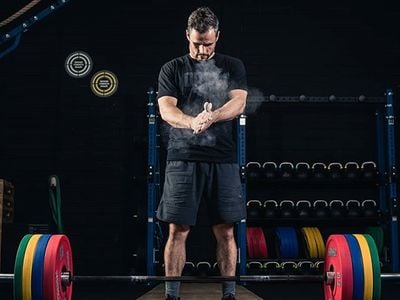
If you plan to lift heavy or install larger equipment like a squat rack or cable machine, you’ll need more room. For strength-focused home gyms, a minimum of 6 to 10 square metres is ideal. This allows space for barbells, bumper plates and machines like leg presses or chest presses. You’ll also need room to move around them safely.
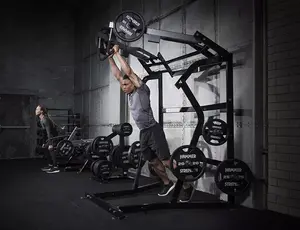
Squat racks typically require at least 2.5m x 1.5m of floor space and at least 2.4m of ceiling height, especially if you’re doing overhead presses or pull-ups. A bit of extra room around the rack also allows for spotters or mat work between sets.
How big does a home gym need to be for commercial training equipment?
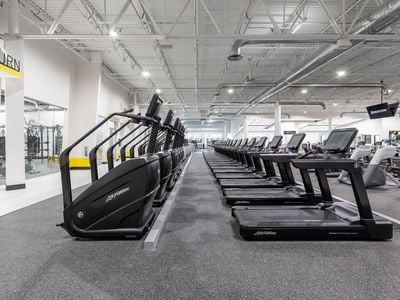
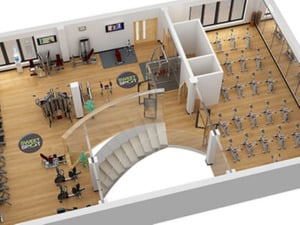
Commercial gym equipment is often larger, heavier and more rigid than home-use versions. A full-size plate loaded machine or commercial cable unit can weigh hundreds of kilograms and take up considerable space. In most cases, you’ll need a dedicated room or garage with reinforced flooring and clear walkways around the equipment to use it safely and comfortably.
What is the minimum ceiling height for a home gym?
For most home gym setups, a ceiling height of 2.4 metres (around 8 feet) is the recommended minimum. This gives enough clearance for exercises like shoulder presses and pull-ups without making the space feel cramped. If you’re planning to install a power rack or use cardio machines with elevation, like treadmills or ellipticals, double-check the equipment height specs plus user height in motion to avoid ceiling clearance issues.
Low ceiling? Focus on compact, floor-based equipment or opt for adjustable benches and dumbbells instead of standing machines.
How do I choose equipment that fits my home gym?
Measure your available space and consider your training priorities. If strength is the focus, look for a compact rack and barbell with rubber plates. If cardio is your priority, consider a treadmill or cross-trainer with a smaller footprint. Many home gym machines now come with foldable designs or built-in storage to maximise small spaces.
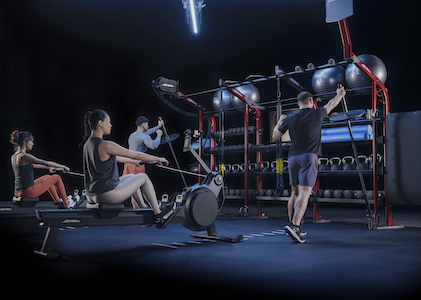
It’s also worth thinking ahead. Will you be training alone, or with others? Do you need space for bodyweight exercises, stretching or mobility work? Answering these questions early helps avoid overcrowding and keeps your home gym functional.
Set up a home gym that fits your goals and your space with Life Fitness
How big does a home gym need to be? Ultimately, it depends on how you want to use it, your goals and your budget. No matter your answer, Life Fitness offers versatile home gym equipment that adapts to your space. From compact cardio machines to space-saving benches and barbell racks, you’ll find high-performance gear for small rooms, garage gyms or full-scale training setups.
Prefer commercial-grade strength? Explore premium machines from Life Fitness, Hammer Strength and Team ICG — including treadmills, cable stations and squat racks built to handle serious sessions. Explore our full range online, or reach out to our team for help in choosing equipment that fits your training goals and the space you’ve got.